




Assisted Living vs. Nursing Home care differs mainly in the level of medical support and daily supervision provided. Assisted living helps older adults stay as independent as possible while receiving help with routines. A nursing home serves people who need skilled nursing, rehabilitation, or more intensive ongoing care.
If you are comparing care for yourself or a parent, look at daily abilities, health needs, safety, and personal preferences. ShadowTree Lodge provides assisted living in Lapeer, Michigan. Understanding how each setting works can make this personal family decision feel more manageable.
What Is the Difference Between Assisted Living and a Nursing Home?
Assisted living is a residential option for older adults who need support with daily activities while retaining a degree of independence. The MedlinePlus overview of assisted living describes it as housing and services for people who need some daily help but not the medical care provided in a nursing home.
A nursing home serves people who need more extensive medical supervision, skilled nursing, rehabilitation, or long-term care. The primary difference is the intensity of medical care and daily supervision.
Assisted Living vs. Nursing Home Comparison
The right setting depends on what the person can manage independently and how much medical support is required.
| Care Consideration | Assisted Living | Nursing Home |
| Main purpose | Supports independence while helping with daily activities | Provides intensive medical care and supervision |
| Daily assistance | May include personal care, meals, housekeeping, and medication support | Combines daily assistance with skilled nursing care |
| Medical care | Support varies according to the community’s approved services | More extensive nursing and medical oversight |
| Living environment | Residential setting with private and shared community spaces | Care-focused residential setting |
| Rehabilitation | Usually not the primary focus | May include physical, occupational, and speech therapy |
| Social engagement | Shared spaces and activities can encourage connection | Social opportunities may be available, with greater focus on health needs |
| Often suited for | Older adults who need support but retain some independence | People with complex medical, rehabilitation, or long-term care needs |
What Assisted Living Provides
Assisted living combines residential living with practical help so residents can maintain choice, dignity, and familiar routines.
Help With Daily Routines
Support may include bathing, dressing, grooming, meals, housekeeping, transportation, and other daily activities based on the resident’s needs.
Medication Management and Nutrition
Medication management supports established schedules, while nutrition services create a more dependable daily routine. ShadowTree Lodge provides both through its assisted living services.
Private Living and Accessible Amenities
Furnished private rooms and wheelchair-accessible showers support privacy and daily ease. Available features also include pharmacy delivery, visiting physicians, cable television, and Wi-Fi.
A Peaceful and Connected Setting
ShadowTree Lodge offers private, secluded acreage, a large patio, and a family room with a stone fireplace. It is close to Lapeer and approximately five miles from a hospital and cancer center, with public transportation available through GLTA.
What a Nursing Home Provides
A nursing home provides more medical care and supervision than assisted living. The MedlinePlus nursing home overview explains that these settings serve people who do not need hospital care but cannot be cared for safely at home.
Skilled Nursing and Medical Oversight
Care may include medication administration, wound care, pain management, chronic condition support, and frequent health monitoring.
Rehabilitation and Recovery
Physical, occupational, or speech therapy may support someone recovering from surgery, illness, or injury.
Long-Term Care for Complex Needs
Long-term care may fit people with chronic conditions, cognitive changes, or extensive supervision needs. The CDC reported 1.2 million U.S. nursing home residents, showing how many families face decisions about this level of support.
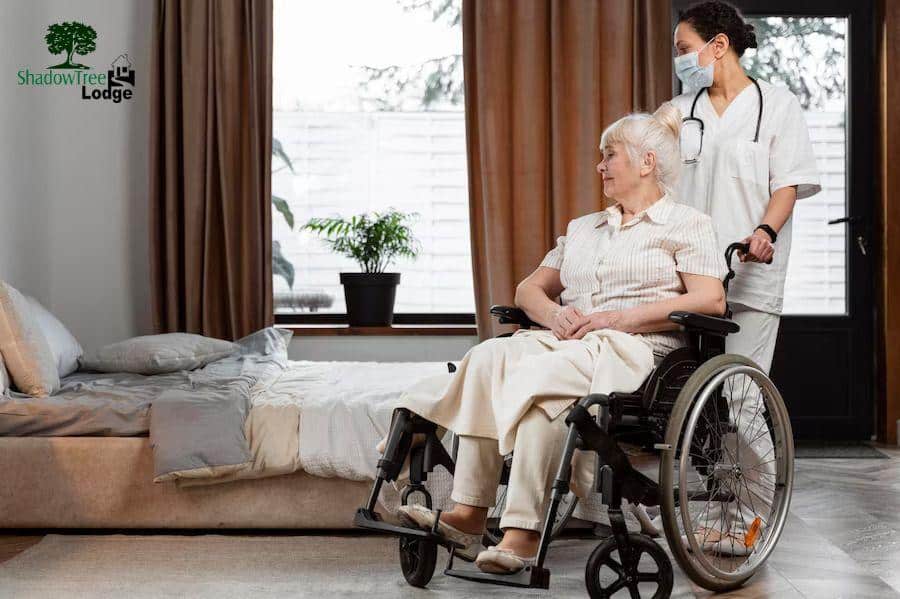
How to Decide Between Assisted Living and a Nursing Home
The criteria for assisted living vs nursing home care should reflect the person’s abilities, health, safety, and support needs, not age alone.
Review Daily Assistance and Medical Needs
Assisted living may fit someone who needs help with routines but can still complete parts of daily care. Regular skilled nursing, wound care, rehabilitation, or intensive medical monitoring may point toward a nursing home.
Consider Independence and the Living Environment
Look at whether your loved one can make decisions, follow familiar routines, and participate in personal care. Privacy, accessibility, social connection, and preferred daily habits also matter.
Plan for Changing Needs
Review recent changes in mobility, medication routines, health, personal care, and supervision. Compare how each setting assesses changing needs. The care assessment can help organize your concerns, while the cost calculator supports practical planning.
Does My Mom Need Assisted Living or a Nursing Home?
Assisted living may fit your mother if she benefits from medication management, nutrition support, or help with daily activities but can still make decisions and follow familiar routines. A nursing home may be more suitable if she needs regular skilled nursing, rehabilitation, frequent monitoring, or extensive supervision.
Real-Life Care Scenarios
Elena still makes her own decisions but needs help with medications, meals, dressing, and transportation. Assisted living may provide the balance of privacy and support she wants.
James is recovering from surgery and needs nursing supervision with physical and occupational therapy. A nursing home or rehabilitation setting may better match his current needs.
Ruth receives help with daily routines, but her health now requires frequent monitoring and skilled care. Her family and care team may need to discuss a higher level of support.
When Care Needs Change
A person’s needs can become more complex over time. Changes in health, cognition, mobility, or supervision requirements may signal that the current setting should be reviewed.
When to Move From Assisted Living to a Nursing Home
A move may be appropriate when medical and supervision needs exceed what the assisted living community can safely provide. Signs may include a growing need for skilled nursing, rehabilitation, wound care, frequent monitoring, or extensive daily help.
One change does not automatically require a move. Review the person’s health, abilities, safety, and preferences with the resident, family, healthcare professionals, and current care team.
Assisted Living or Nursing Home for Dementia
Choosing assisted living or a nursing home for dementia depends on cognitive changes, daily abilities, medical needs, mobility, and required supervision. A diagnosis by itself does not determine the right setting.
Someone who needs limited daily help has different needs from a person requiring skilled nursing or frequent medical monitoring. Confirm that the setting can provide the specific support and safety measures your loved one needs.
Other Senior Living Terms and Care Levels
Similar terms can describe very different living arrangements. Ask each provider to explain what care is included instead of relying on the name of the setting alone.
Assisted Living vs. Nursing Home vs. Retirement Home
Assisted living provides residential support with daily activities, while a nursing home provides more intensive medical and nursing care. The term retirement home can be used broadly, so its services may differ between settings.
Ask how changing needs are handled and whether medical or personal support is included. The services offered provide a clearer picture than the community’s name.
Understanding Levels of Care in Assisted Living
Levels of assisted living care describe how much support a resident needs with personal care, medication routines, meals, mobility, and other activities. The terms and assessment process vary between providers.
The phrase 5 levels of care in assisted living does not refer to one universal system. For a closer look at how these levels may be explained, read 5 Levels of Care in Assisted Living.
How to Evaluate an Assisted Living or Nursing Home
A thoughtful evaluation should show whether a setting can meet the person’s physical, emotional, social, and medical needs. Ask direct questions and notice how clearly staff explain their services and care process.
Useful questions include:
- What daily activities can staff assist with?
- How are care needs assessed and reviewed?
- What happens when a resident’s needs change?
- Are private rooms and accessible spaces available?
- How are families included in care discussions?
You can learn more about the community’s values and setting through About ShadowTree Lodge. A personal visit can also help you understand the atmosphere, accommodations, and available support.
Find the Right Level of Support in Lapeer, Michigan
Assisted living supports daily routines while helping older adults preserve independence. Nursing homes provide more intensive nursing, rehabilitation, medical supervision, and long-term care. Your decision should reflect the person’s abilities, health needs, preferences, and required support.
ShadowTree Lodge provides assisted living, medication management, and nutrition at 1378 ShadowTree Lane, Lapeer, MI 48446. You can contact ShadowTree Lodge to schedule a tour and talk through your family’s questions for a personal conversation.
Frequently Asked Questions
What Is One of the Biggest Drawbacks of Assisted Living?
One possible drawback is that assisted living may not provide the intensive medical care required by someone with complex health needs. It may not include skilled nursing, extensive rehabilitation, or continuous medical monitoring. Available services also differ between communities. Families should compare the person’s needs with the support each setting is equipped to provide.
What Is the Highest Level of Care in Assisted Living?
There is no single highest level of assisted living care used by every provider. Communities may organize care according to help needed with personal care, meals, mobility, and medication routines. A resident’s needs are usually reviewed through an assessment. Someone who requires regular skilled nursing or extensive medical supervision may need a nursing home.
What Is the Most Common Type of Patient in Assisted Living Facilities?
A typical assisted living resident is an older adult who wants to remain independent but needs help with one or more daily activities. That support may include personal care, meals, medication routines, housekeeping, or transportation. Assisted living communities generally use the word resident, not patient. Each person’s abilities and needs are different, so support should be personalized.
What Is More Intensive Than Assisted Living?
A nursing home typically offers more intensive care than an assisted living facility. It may offer round-the-clock nursing support, medical monitoring, rehabilitation, and long-term care for complex needs. Assisted living focuses primarily on providing residential support and assistance with daily routines. The right choice depends on how much medical care and supervision the person requires.